Key takeaways
- A bidirectional meter counts import and export separately; you pay only for the net units.
- Home subsidy cases apply through the national portal; feasibility, inspection and the meter still happen at your DISCOM.
- Plant size is capped at your sanctioned load. Raise the load first if you want a bigger plant.
- Most delays come from a name mismatch, a wrong consumer number or a bank account that is not Aadhaar-seeded.
What net metering actually does
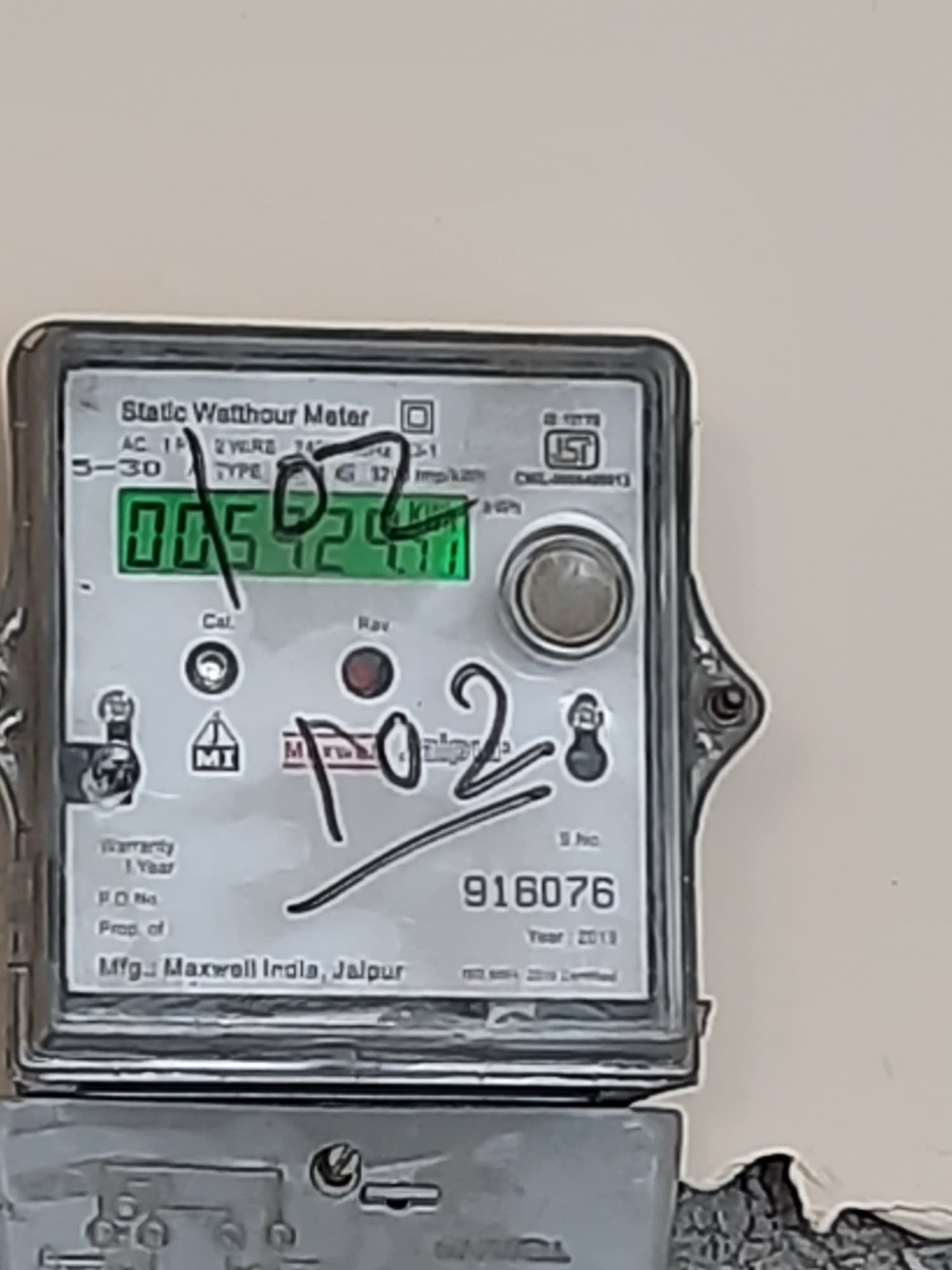
A rooftop plant makes most of its units in the middle of the day. Unless someone is home running appliances, much of that power has nowhere to go. Net metering solves this: a bidirectional meter replaces your existing meter, records what you draw from the grid and what you push into it, and the DISCOM bills you on the difference. Export in the afternoon, import at night, pay for the net.
In Rajasthan the three distribution companies, JVVNL for the Jaipur region, AVVNL for Ajmer and JdVVNL for Jodhpur, run the process under the state regulator's rooftop rules. The forms differ a little; the sequence is the same.
Who can apply
- Any consumer with a valid connection in their own name: home, shop, office, factory or institution.
- The plant is sized up to the sanctioned load on that connection. A 5 kW plant on a 3 kW load fails at feasibility.
- For the PM Surya Ghar subsidy the plant must be grid-connected and built with ALMM-listed, domestic-cell panels. Non-subsidy plants can use any ALMM-listed module. See the ALMM and DCR checklist.
- Housing societies can apply for common connections under group net metering, enabled in Rajasthan in 2025. See solar for societies.
The documents
- Latest electricity bill. The consumer number on it is the key to the whole application.
- Aadhaar, with the name spelt exactly as on the bill.
- Proof of roof rights: the property paper, or a letter from the society for a shared roof.
- A passport photo for the portal profile, and for subsidy cases a bank passbook or cancelled cheque of an Aadhaar-linked account in your name.
- For a business: the connection's sanctioned-load details and the firm's registration, since the application is in the firm's name.
The steps, in order
- Application. Home subsidy cases go on pmsuryaghar.gov.in with your DISCOM and consumer number; non-subsidy and commercial cases go through the DISCOM's own rooftop solar portal. Roof details and system size are entered here.
- Feasibility. The DISCOM checks the connection, the sanctioned load and the transformer capacity on your feeder, then issues feasibility approval for the size applied.
- Vendor and installation. You pick a vendor registered with your DISCOM. The plant goes up, with the inverter set to the grid parameters the DISCOM requires.
- Work-completion report. The vendor uploads the installation details, the test reports and the photographs.
- Inspection and meter. A DISCOM engineer inspects the plant, checks earthing, protection and the inverter settings, and the bidirectional meter is installed. The meter cost is paid to the DISCOM.
- Agreement and commissioning. The net-metering agreement is signed, the plant is switched on, and for subsidy cases the commissioning report goes on the portal with your bank details for the transfer.
How long it takes
The installation itself is a day for most homes. The DISCOM steps depend on the sub-division: feasibility usually clears within a couple of weeks, the inspection and meter follow once the completion report is in, and subsidy transfers typically land 30 to 90 days after commissioning. We chase each stage and tell you on WhatsApp when it moves.
Where applications stall
| Problem | What happens | The fix |
|---|---|---|
| Name mismatch | Aadhaar spells the name one way, the bill another; the portal rejects. | Correct the bill at the DISCOM first, then file. |
| Wrong consumer number | A digit off, or a neighbour's connection at the same address. | Read it off the bill and confirm on the DISCOM portal. |
| Load too low | A 5 kW plant on a 3 kW sanctioned load fails feasibility. | Raise the load with the DISCOM first, or size to it. |
| Unregistered vendor | Work by a vendor not on the DISCOM list gets no subsidy. | Check the portal's vendor list before signing with anyone, including us. |
| Bank not Aadhaar-seeded | The transfer fails quietly. | Check the seeding status before the commissioning upload. |
Reading the first net-metered bill
The first bill after commissioning shows three numbers: units imported, units exported and the net. If export is higher than import, the surplus is carried forward as credit and settled at the end of the DISCOM's settlement period at its published rate. Check that the meter reading date sits after the commissioning date. If the bill still shows the old meter, the change has not been recorded and the sub-division needs a call.
Sources
Part of Rajasthan Rooftop Solar Guide: net metering
Suntask engineering desk · Jaipur
Posts are drafted by the engineers who size, file and install Suntask plants across Rajasthan, and checked against the scheme portals before publishing. Figures carry the date they were last checked.