Loading the page…
Financing
ENहिं
See the monthly cost alongside the EMI.
Loan terms and upfront payment depend on lender approval. Include remaining electricity bills and battery costs.
- Lender approval required
- Subsidy subject to eligibility
Your roof. Your energy.
A clearer path to solar ownership.
- Upfront payment
- Monthly EMI
- Subsidy claim
On the rooftops of



The team that builds and maintains 400+ solar plants across Rajasthan prepares your loan file.
Two ways to pay
Every Suntask proposal comes with a financing recommendation. These are the two routes.
Recommended for homes up to 3 kW
Bank loan under PM Surya Ghar
- Review the lender’s rate, fees, tenure and upfront contribution.
- Loan approval and subsidy timing are not assured.
- Eligible solar capacity determines central assistance; battery cost does not increase it.
No lender, no interest
Pay direct
- A milestone schedule: 20% advance on booking · 70% on material delivery · 10% on commissioning. Your approved proposal carries the stages for your own system.
- The subsidy claim is filed for you either way. Subsidy is processed after the required approvals, and the receiving account follows the scheme's rules.
What end-to-end means
How the application works.
- 1
Check
YouSend your latest electricity bill on WhatsApp.
WeConfirm system size, loan route and loan amount the same day.
Day 0
- 2
File
YouSign the application we prepare.
WePrepare the complete file on the Jan Samarth portal or at the branch. Documents: Aadhaar, PAN, latest electricity bill, six-month bank statement, ownership proof, one photograph.
Days 1–3
- 3
Sanction
The bank approves; we schedule your installation against the sanction date.
Typically 7–14 days
- 4
Install and disburse
Disbursement releases to the project; our crew completes even a 10 kW site in a day.
One day on the roof
- 5
Subsidy
We file net-metering and the subsidy claim. Subsidy is processed after the required approvals; the receiving account and any loan adjustment follow the scheme and lender's rules.
After the required approvals
After this there is one instalment, one monitored roof, and one team that looks after it.
20 scheduled visits over five yearsSolar EMI calculator
Work out your number.
Compare loan repayments using editable assumptions. Include your remaining electricity bill and storage ownership costs. A bill alone cannot size a battery or estimate its runtime.
Start with the loan you need
This entire amount is your loan. No 10% upfront amount is deducted. Maximum ₹6 lakh.
1–120 whole months; e.g. 3 years or 3.5 years.
Blank uses 9%: planning preset 6% up to ₹2 lakh; 9% above ₹2 lakh up to ₹6 lakh, on the entire loan. Enter your bank's offered rate.
These are planning presets, not universal scheme rates.
Use 0 if eligibility is unconfirmed. ₹78,000 is only an illustration for an eligible system.
Assumed timing, not a promised date. 0 means before the first EMI.
Enter your own allowance; include battery purchase in the loan/upfront cost. A reviewed design establishes energy losses, reserve, power limits and replacement needs.
Include fixed charges and any electricity still imported. Enter your estimate; no zero-bill assumption.
Your monthly EMI
Full loan amount: ₹3,00,000
₹9,540
9% · 36 months · Subsidy assumed after 6 EMIs
Financing cost
- EMI before subsidy
- ₹9,540 /month
- EMI after subsidy
- ₹9,540 /month
- Loan finishes in
- 36 months
- Total interest with subsidy repayment
- ₹43,437
- Interest without subsidy repayment
- ₹43,437
- Interest saved
- ₹0
- Total EMI payments from your pocket
- ₹3,43,437
When subsidy reaches the loan
No subsidy is included yet. Enter a subsidy amount above ₹0 to compare Lower EMI and Finish Earlier.
- Original loan
- ₹3,00,000
- Outstanding before subsidy
- ₹2,55,432
- Subsidy applied to principal
- ₹0
- Principal left to repay
- ₹2,55,432
₹2,55,432 − ₹0 = ₹2,55,432. The remaining balance is principal only; future interest is calculated on it.
Payment timeline and advisor checks
- Your first 6 EMI paymentsEach EMI includes interest and principal.
- ₹57,240
- Of those payments: interest
- ₹12,672
- Of those payments: principal repaid
- ₹44,568
- Start with ₹3,00,000 over 36 months at 9% per year.
- Pay 6 EMIs of about ₹9,540 before the assumed subsidy repayment. Interest already paid is not reversed.
- Apply ₹0 once to principal.
- Then 30 payments remain. Regular EMI is about ₹9,540; the last payment in month 36 is about ₹9,540.
- After the loan ends, the expected remaining electricity bill continues. Electricity charges and actual savings can change.
Loan repayment check: your EMI payments ₹3,43,437 + subsidy used ₹0 = original loan ₹3,00,000 + interest ₹43,437. Figures round independently to rupees.
This is loan cash flow, not the full installed-system cost. Upfront contribution, fees, insurance, maintenance and electricity bills are outside the total EMI figure.
Confirm before presenting this as a plan
- Bank's offered rate, tenure, fees and any moratorium.
- Subsidy eligibility, amount, expected timing and how it will reach the loan account. Keep paying the bank's due EMI until credit and the revised schedule are confirmed.
- Whether the bank permits lower EMI or earlier closure after repayment, and how excess subsidy is handled.
- Remaining electricity bill including fixed charges; do not infer it from the loan amount.
Enter today's bill and the expected remaining bill to compare total monthly outgo.
Planning estimate, not a bank offer. Rate held constant; fees, insurance and moratorium excluded. Subsidy eligibility, receipt date and EMI recasting require confirmation. Remaining electricity bill must include fixed charges; actual savings may vary.
Standard illustrations
Residential DCR solar examples with assumed subsidy eligibility. Approximate prices include GST and exclude batteries. Financing uses shared planning assumptions; these are not lender offers. Check eligibility before applying these figures.
| Plant size | DCR price incl. GST (₹) | You pay upfront | Bank loan | EMI (10 yr) | EMI after subsidy prepayment |
|---|---|---|---|---|---|
| 1 kW | ₹82,243 | ₹8,224 | ₹74,019 | ~₹860 | ~₹500(₹30,000 subsidy) |
| 2 kW | ₹1,43,925 | ₹14,393 | ₹1,29,533 | ~₹1,500 | ~₹790(₹60,000 subsidy) |
| 3 kW | ₹2,03,943 | ₹20,394 | ₹1,83,549 | ~₹2,130 | ~₹1,210(₹78,000 subsidy) |
| 4 kW | ₹2,42,176 | ₹48,435 | ₹1,93,741 | ~₹2,350(at ~8%) | ~₹1,390(₹78,000 subsidy) |
| 5 kW | ₹2,97,866 | ₹59,573 | ₹2,38,293 | ~₹2,890(at ~8%) | ~₹1,930(₹78,000 subsidy) |
| 6 kW | ₹3,26,544 | ₹65,309 | ₹2,61,235 | ~₹3,170(at ~8%) | ~₹2,210(₹78,000 subsidy) |
| 7 kW | ₹3,58,173 | ₹71,635 | ₹2,86,538 | ~₹3,480(at ~8%) | ~₹2,510(₹78,000 subsidy) |
| 8 kW | ₹3,89,804 | ₹77,961 | ₹3,11,843 | ~₹3,780(at ~8%) | ~₹2,820(₹78,000 subsidy) |
| 9 kW | ₹4,28,692 | ₹85,738 | ₹3,42,954 | ~₹4,160(at ~8%) | ~₹3,200(₹78,000 subsidy) |
| 10 kW | ₹4,67,580 | ₹93,516 | ₹3,74,064 | ~₹4,540(at ~8%) | ~₹3,580(₹78,000 subsidy) |
- Approximate DCR prices include GST and exclude batteries and site additions. A reviewed proposal confirms the final scope and total.
- Illustrations assume 10 years, 7% interest and 10% upfront through 3 kW, and 8% interest and 20% upfront above 3 kW, subject to the planning loan caps. Subsidy is assumed to prepay the loan in month 3; EMI is rounded to the nearest ₹10.
- Loan rates, fees and approval depend on the lender; subsidy timing is uncertain.
The EMI and the bill
Compare EMI with generation value.
See solar, inverter, battery, installation and service separately. Compare savings using actual tariffs, energy use, battery losses and future replacement costs. Include GST and all site additions in the proposal.
If most of your bill is already covered by free MNBY units, solar will not pay back quickly. Our survey will tell you that plainly, including when the answer is that you should not buy yet.
Solar for homesShops and factories
PM Surya Ghar covers homes only.
For shops and factories we arrange term-loan financing through partner banks, and your accountant will want to look at one more line: accelerated depreciation on solar assets, which can change the payback math.
Off-grid systems receive no central subsidy and no PM Surya Ghar loan. Ask us on WhatsApp about EMI for them. Off-grid solar, in plain words
The loan
Questions about the loan.
Must I replace my on-grid system?
No. A working on-grid system remains useful. Consider storage when evening use or backup matters. Compare added cost with your needs.
Will solar work during a cut?
Standard on-grid shuts down with the grid. Backup requires a suitable inverter, compatible charged battery and separate circuits. Hybrid supplies the loads selected in its design.
How long will backup last?
Usable energy, starting charge, reserve and load determine runtime. We estimate for your appliance list. More running appliances reduce available time.
Can it run an AC or pump?
Yes, with a system designed for the load. Check running power, starting demand and simultaneous appliances. Both battery capacity and inverter power matter.
Can I add a battery directly?
Not to every system. Equipment, wiring, metering, approvals and warranties need checks. Some parts may stay; others may change. An upgrade review identifies options.
Will my computer stay on?
Inverter transfer time and the computer’s tolerance need checking. Sensitive equipment may still need a dedicated UPS alongside hybrid solar.
How much battery maintenance?
LFP needs no water topping. Installation, temperature and periodic checks still matter. Life and performance depend on use and manufacturer conditions.
Can hybrid receive subsidy?
Eligible residential grid-connected hybrid may receive assistance based on solar capacity. Battery cost does not increase central assistance. Current rules and approvals apply.
How do meters and exports affect bills?
Your approved tariff sets the rates. Self-use, bill credits and payment for residual surplus are different. We compare using your connection’s rules.
Will I stop needing the grid?
Most hybrids retain it. Long outages, heavy loads and low sunlight can exhaust storage. Full off-grid operation needs a separate design and budget.
Will solar fast-charge my EV?
Solar can provide charging energy. Speed depends on the vehicle, charger and available power. DC alone is not faster; compatible controlled charging equipment is needed.
Can I view readings in the app?
The customer RMS app is not released yet. Call/WhatsApp for available readings and service. Battery readings depend on equipment and connectivity.
Fair print
The bank lends. We run the process.
- Suntask (Shriarjun Needday Primemart Pvt Ltd) is a solar EPC company, not a bank or NBFC. Loans are sanctioned by the lending bank; approval, rate and terms are the bank's decision.
- Calculator rates are editable planning assumptions. Confirm current rates and all charges in the lender’s Key Facts Statement.
- Eligible PV assistance follows scheme rules and approvals. Battery cost does not increase central assistance.
- Insurance may be required for systems above 3 kW, per bank norms.
- Your exact price, rate, EMI and subsidy are printed in your proposal.
From the blog
Explained by the engineers.

Buying a system
Solar loan interest rates in Rajasthan
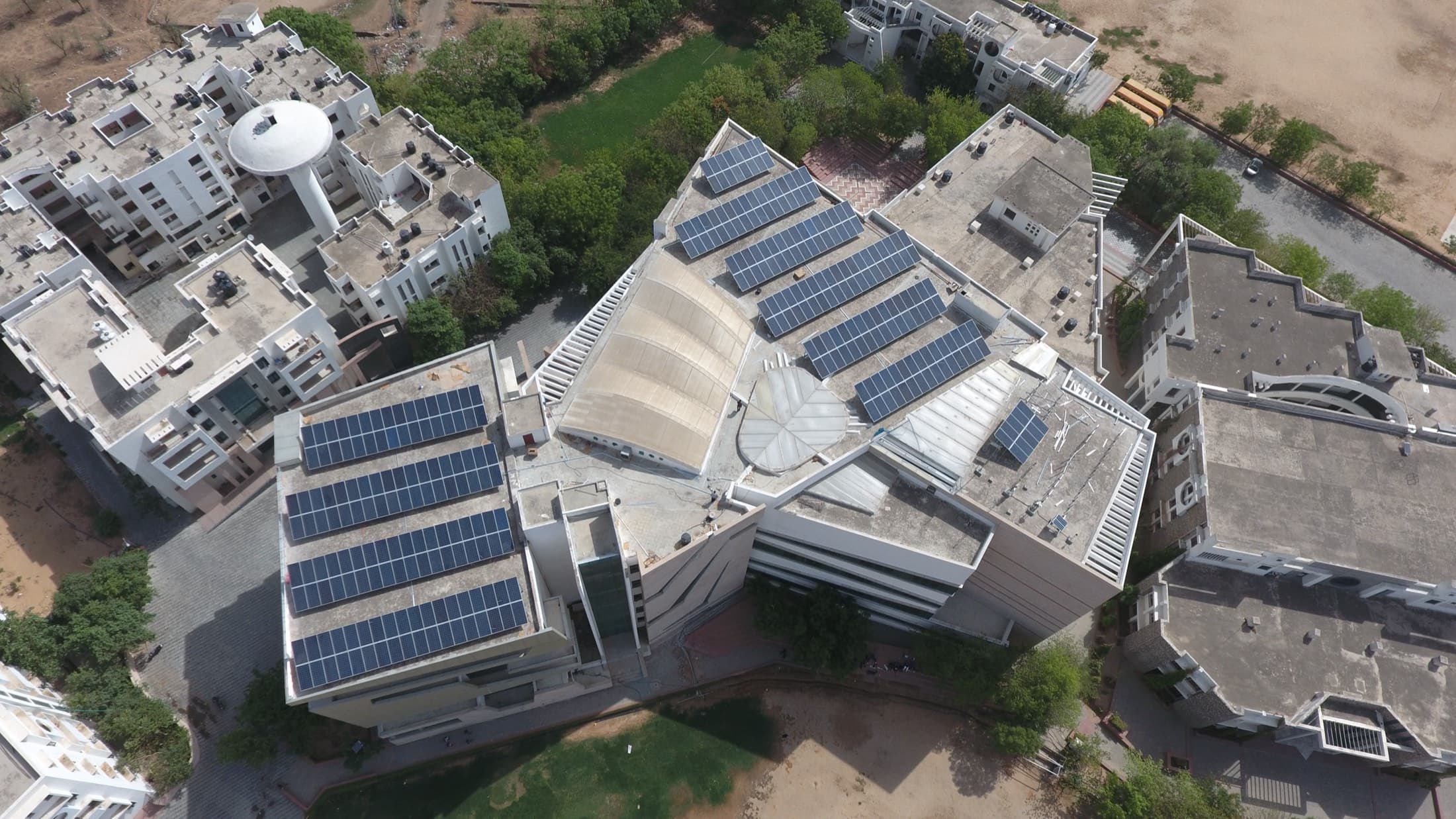
Compare bank rates, understand subsidy adjustments and explore your monthly payment with Suntask’s solar EMI calculator.
13 October 2026 · 7 min readRead the article
Net metering and DISCOMs
Net metering in Rajasthan: JVVNL, AVVNL, JdVVNL, step by step
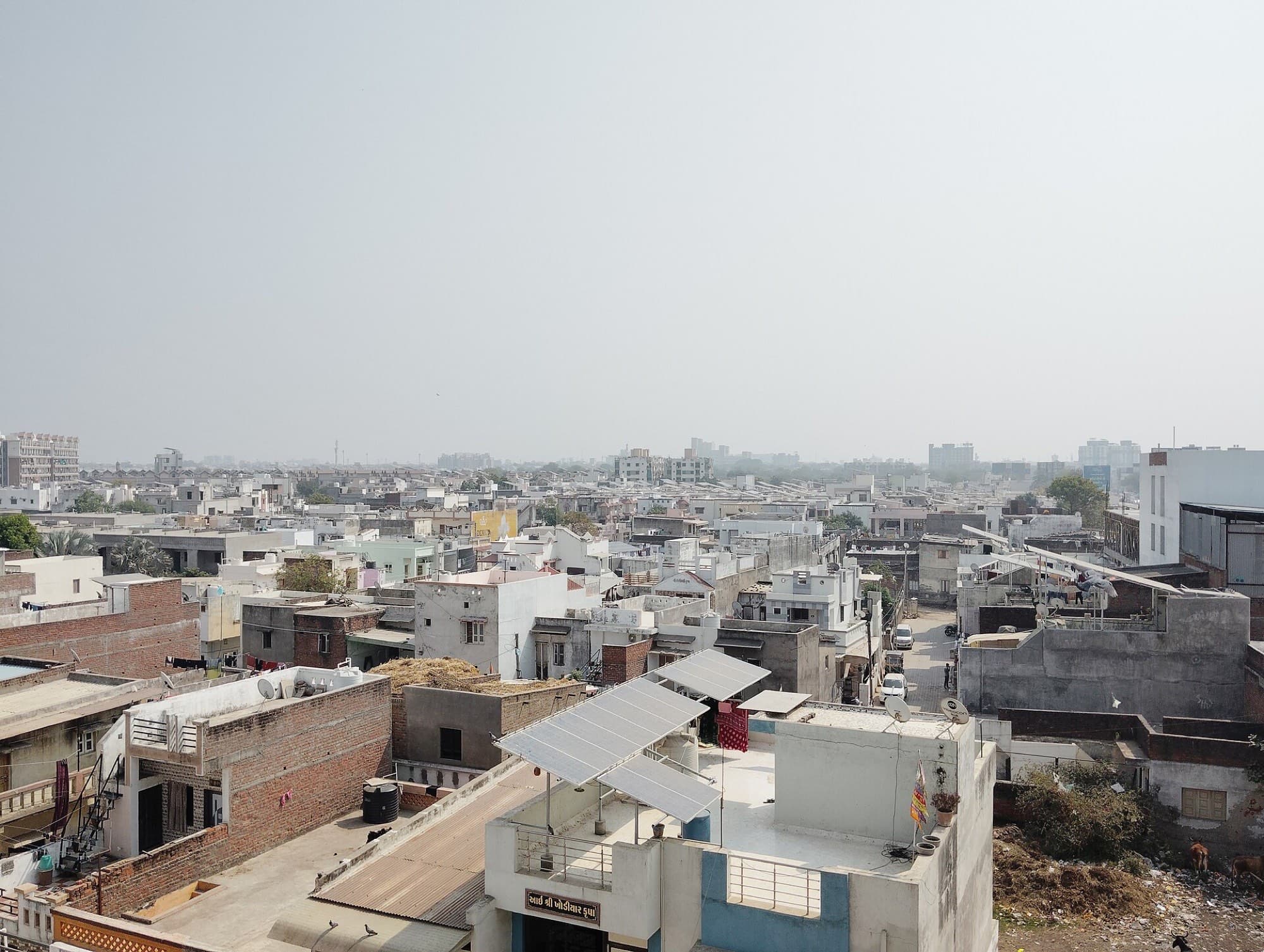
Net metering is the agreement that turns your roof into a two-way account with the DISCOM. Here is how the application moves through JVVNL, AVVNL or JdVVNL, what each step needs from you, and where applications stall.
4 September 2026 · 5 min readRead the article
Subsidy and money
Rajasthan's ₹17,000 solar top-up, explained
The central PM Surya Ghar subsidy tops out at ₹78,000. Rajasthan adds up to ₹17,000 for families under its free-electricity scheme, taking the total to ₹95,000. This is the explainer for that extra amount: eligibility by connection, the payment route, and the maths for the small plant it was designed around.
4 September 2026 · 4 min readRead the article
Request a call back
Send your bill. Get your number.
One WhatsApp message starts the eligibility check; we reply the same day. Or leave your details here and we call you back.