Key takeaways
- Dust is the biggest controllable loss: up to 15% of output on an uncleaned array.
- Clean with plain water and a soft brush in the early morning; never with detergents, abrasives or a hard jet on a hot panel.
- Heat lowers module output, but the long days more than compensate; airflow under the array matters.
- Monitoring shows the loss before the bill does, which is the point of RMS.
What dust does
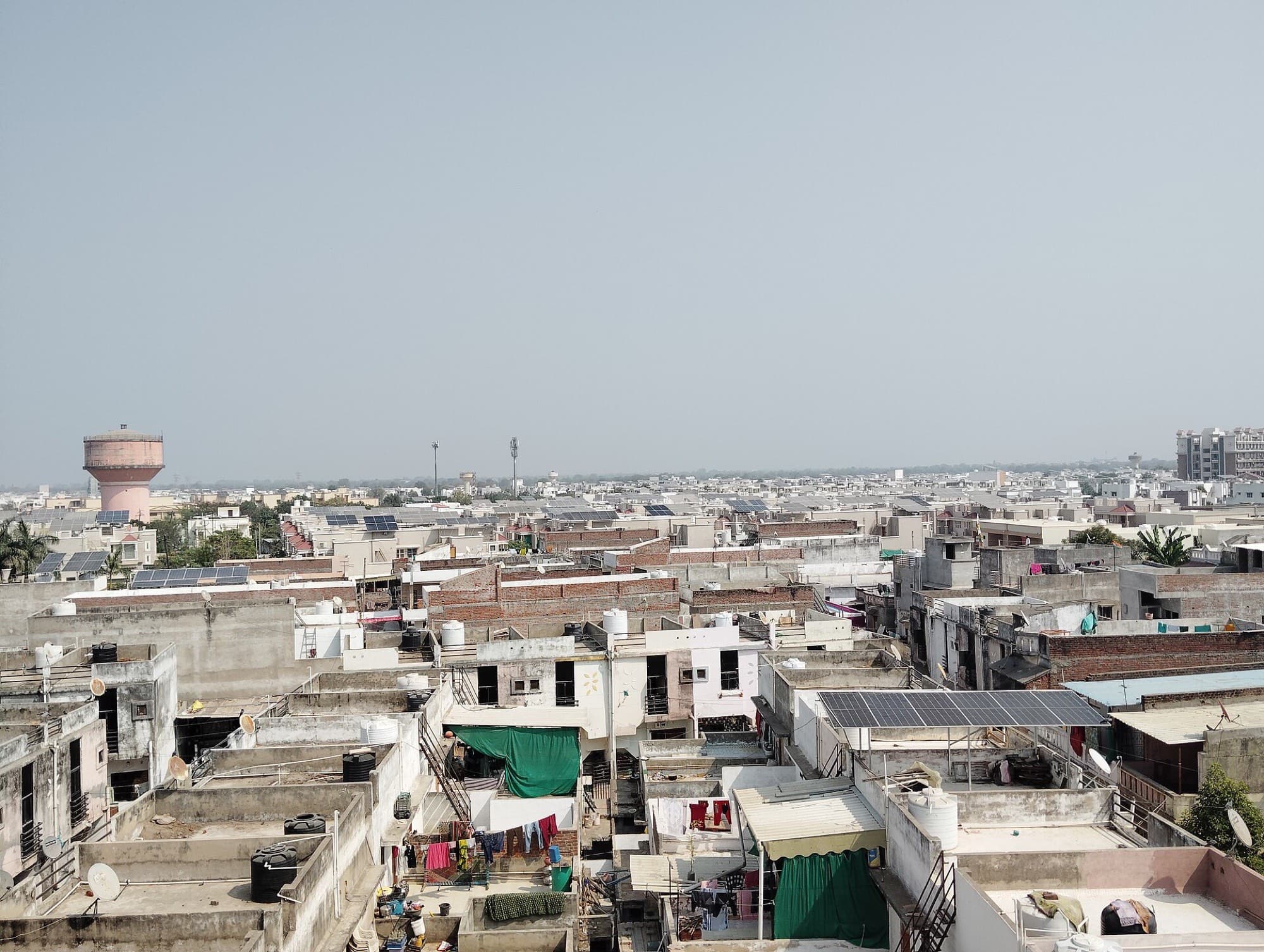
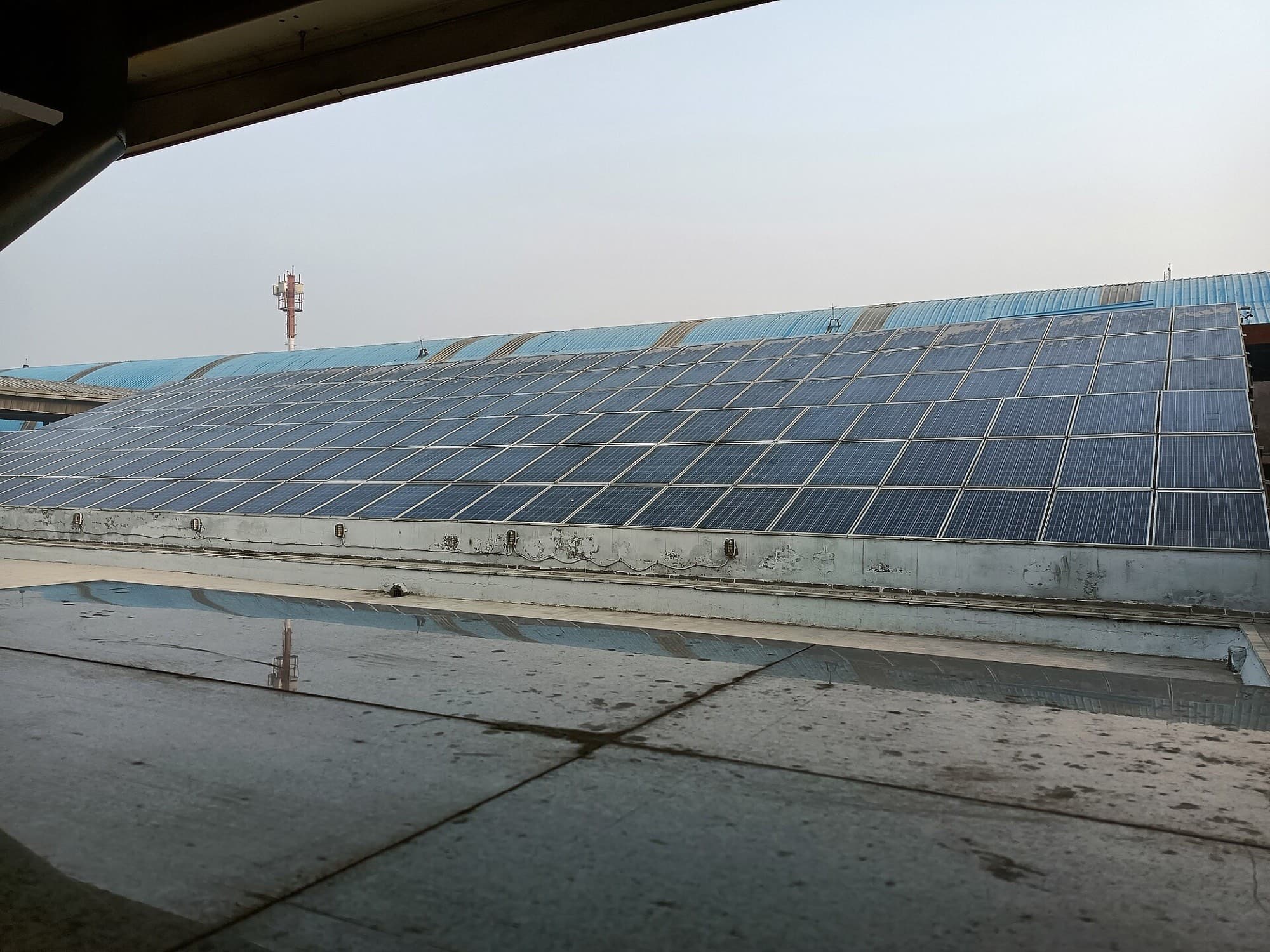
A fine film of dust scatters light before it reaches the cells. In Jaipur a week of loo winds in May can leave an array visibly grey; after a dust storm the loss can reach 15% until the panels are cleaned. Bird droppings are worse per spot: a single dropping on one cell can pull down the whole string, because modules in a string share their current.
How often to clean
| Season | Cleaning | Why |
|---|---|---|
| March to June | Every two to three weeks | Dust storms and dry winds, in the highest-generation months, so the loss costs most. |
| July to September | After the first rains, then as needed | Rain does most of the work, but the first showers turn dust into mud streaks. |
| October to February | Monthly | Winter fog and construction dust settle slowly. |
Suntask schedules service visits to the dust season, not the calendar.
How to clean without harm
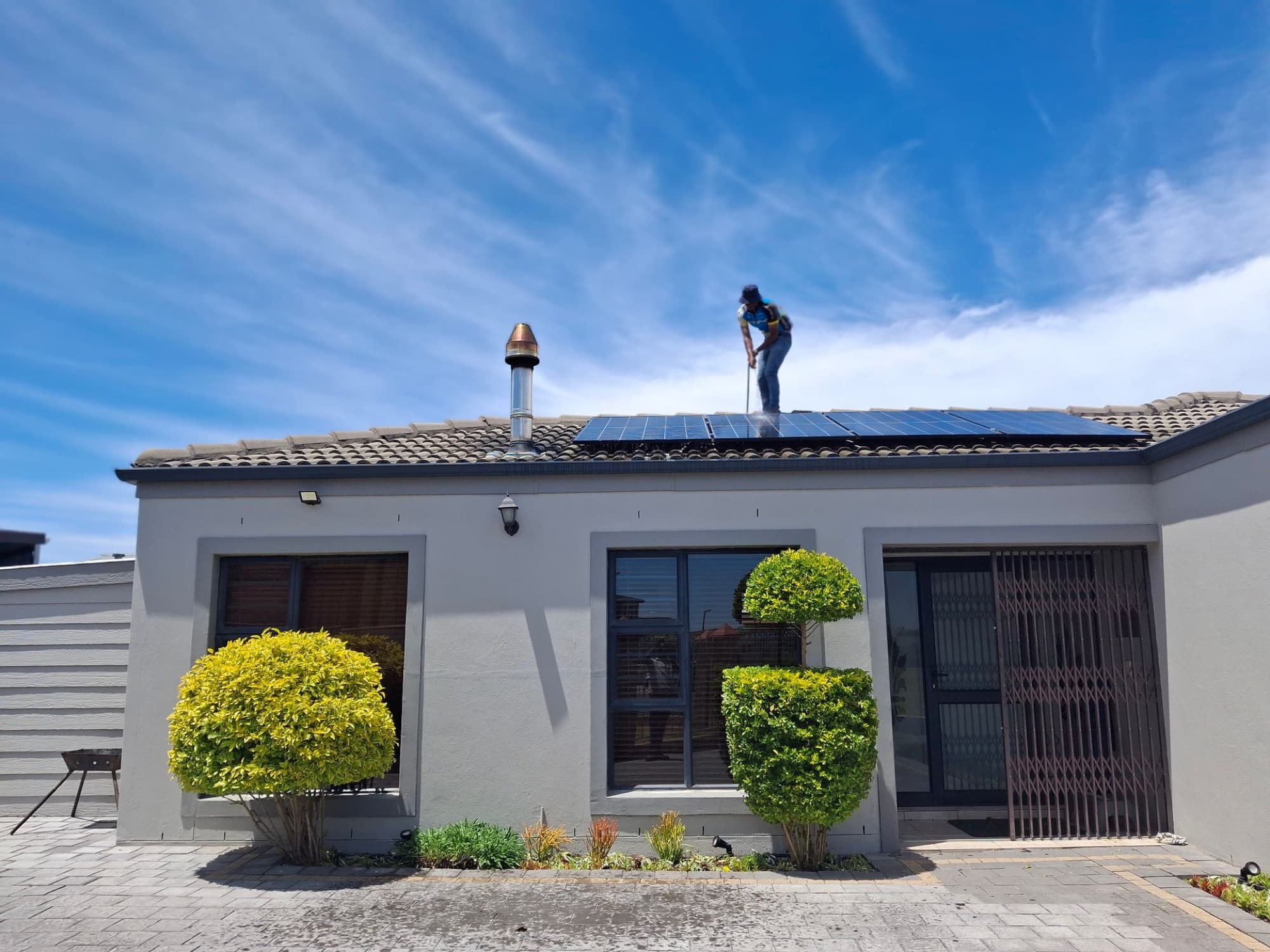
- Early morning or after sunset, when the glass is cool. Cold water on a hot panel can crack it.
- Plain water and a soft brush or microfibre. No detergent, no abrasive pad, no pressure washer.
- Never stand on the modules. Walk on the structure or use a pole from the edge.
- Switch off the DC isolator if you are touching cables or connectors; for surface cleaning, leave the plant running.
- Look while you clean: a cracked glass, a browned cell, a loose connector or a bird nest under the array is worth a photograph and a message to your technician.

What heat does
Every module has a temperature coefficient: output drops by a small percentage for every degree above the test condition. On a 45-degree afternoon the panel surface can pass 65 degrees, and output falls by a tenth or so. The long, clear days more than make up for it, which is why March to May are still the best months. What helps: a mounting structure with clear airflow beneath, and not mounting flush to a hot RCC slab.
What the monsoon does
Cloud cuts output for the weeks the monsoon is active, and Rajasthan's monsoon is short. The real risks are water and wind: a structure rated for the local wind speed, sealed roof penetrations, and earthing that has been checked before the season. Lightning arrestors and surge protection on the DC side are not optional in an open landscape.
What monitoring adds
You cannot see a 10% loss on a roof. You can see it on a graph. RMS, our in-house monitoring platform, records every unit every day and grades the plant's generation, Excellent, Good or Needs attention; a Needs attention day raises a ticket before you would notice it on the bill. On a Suntask plant that ticket is ours to close. See the RMS app.
Part of The RMS app
Suntask engineering desk · Jaipur
Posts are drafted by the engineers who size, file and install Suntask plants across Rajasthan, and checked against the scheme portals before publishing. Figures carry the date they were last checked.